3. Movement into & out of Cells
1. This question has 4 part(s).
1.1. Particulate matter (PM) refers to the small particles in air pollution which can irritate the airways and caused damage to the alveoli. Alveoli are tiny air sacs in the lungs across which gas exchange by diffusion occurs.
Fig. 1 shows the structure of an alveolus with a capillary running next to it.
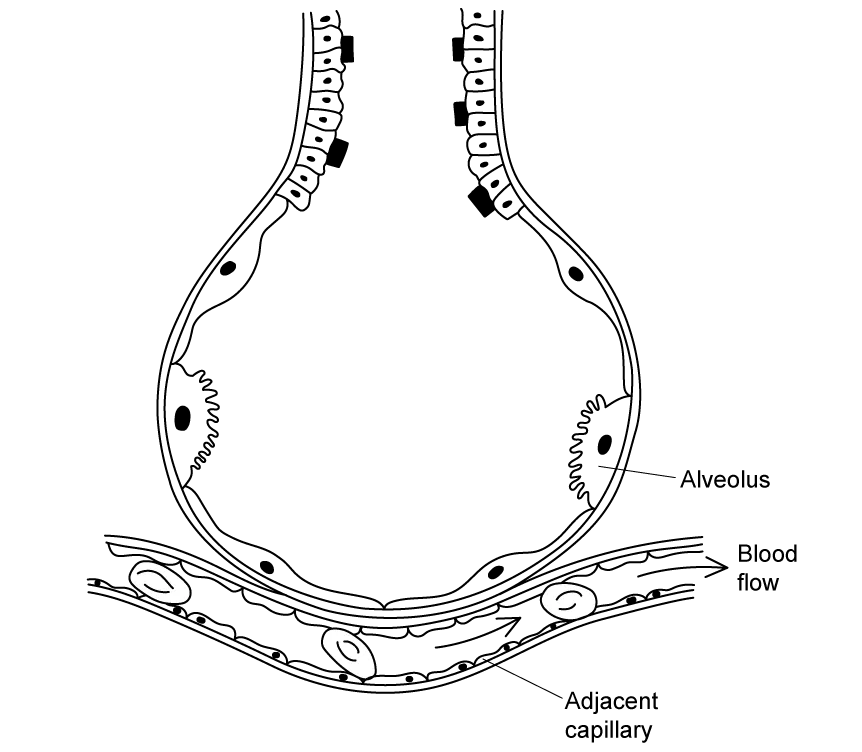
Fig. 1
If concentrations of PM are high, the epithelium cells of the alveoli may be killed and replaced with unspecialised cells resulting in:
Fewer functioning alveoli
Thickening of alveolar walls
Explain how particulate matter would affect the process of gas exchange in human lungs.
1.2. Fig. 2 shows the results of an investigation into the concentration of particulate matter and the percentage of dead alveolar epithelium cells after 48 of exposure.
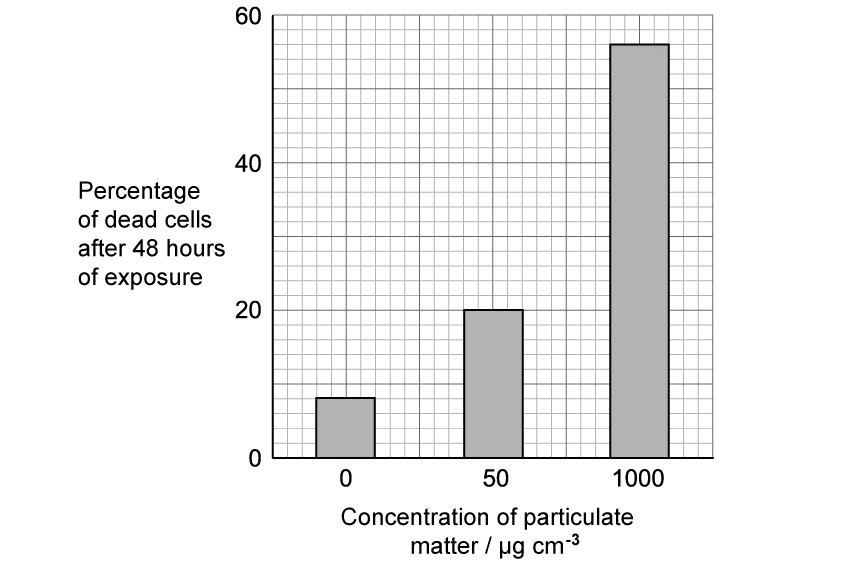
Fig. 2
Scientists studied 31 080 alveolar epithelium cells in this study.
Calculate how many more cells died after 48 hours of exposure to 1 000 µg cm-3 of particulate matter than after 48 hours of exposure to 50 µg cm-3 of particulate matter.
1.3. Oxygen is required for the process of cellular respiration in cells. People living in urban areas with high levels of air pollution will often suffer from fatigue (feeling tired).
Use the information provided in part (a) and (c) to suggest an explanation for this.
1.4. Other than diffusion, movement of molecules in the body could also occur by osmosis and active transport.
Compare osmosis and active transport with each other.

Ai এর মাধ্যমে

১০ লক্ষ+ প্রশ্ন ডাটাবেজ

প্র্যাকটিস এর মাধ্যমে নিজেকে তৈরি করে ফেলো
উত্তর দিবে তোমার বই থেকে ও তোমার মত করে।

সারা দেশের শিক্ষার্থীদের মধ্যে নিজের অবস্থান যাচাই
No related questions found