Forced Vibrations & Resonance
1. This question has 4 part(s).
1.1. Figure 1 shows an apparatus for investigating forced vibrations and resonance of a mass-spring system.
Figure 1
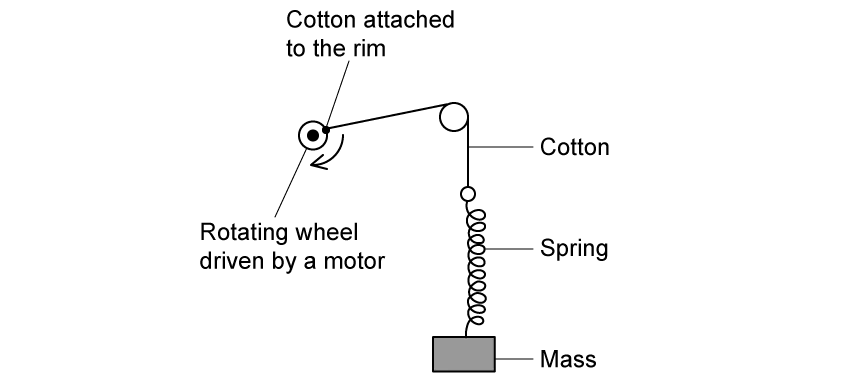
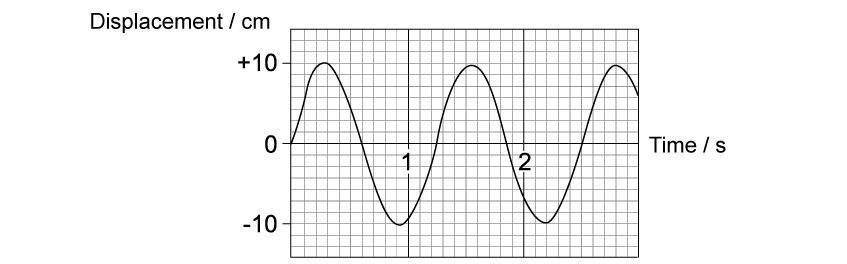
Figure 2 shows the displacement-time graph when the system is resonating.
Figure 2
The rotating wheel causes the mass to perform forced vibrations. Under certain conditions, the system may demonstrate resonance.
The mass of the spring used in the experiment was 0.44 kg and the additional mass placed on the spring was 0.5 kg.
(i) Using information from Figure 2, determine the value of the spring constant of the spring.
(ii) Hence show the oscillation frequency is about 0.5 Hz.
1.2. When the rotating wheel stops, Figure 3 shows how the amplitude of the oscillations of the mass subsequently varies with time.
Figure 3
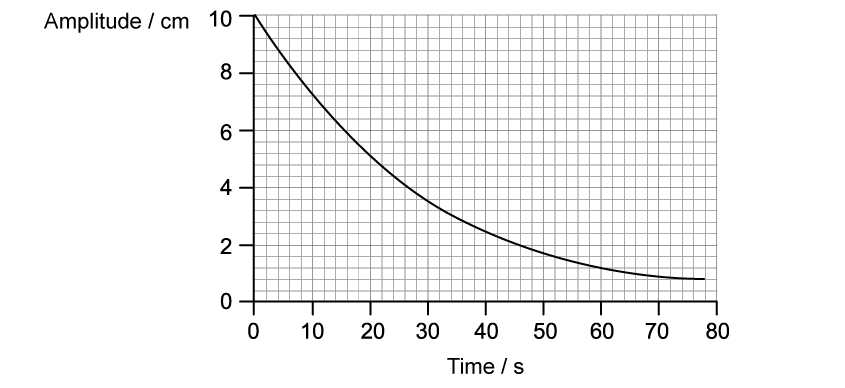
Explain whether the graph in Figure 3 supports the suggestion that the amplitude of the damped oscillations varies exponentially with time. Show your reasoning clearly.
1.3. Determine the ratio
1.4. The mass-spring system is now suspended from a horizontal support rod that can be made to oscillate vertically, as shown in Figure 4, with amplitude 10 mm at several different frequencies.
Figure 4
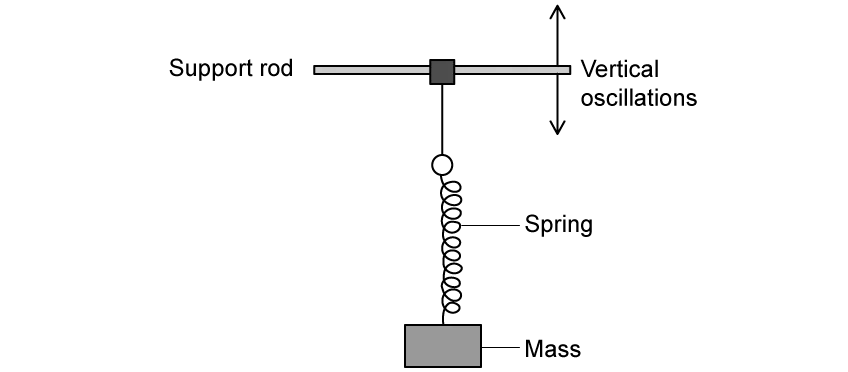
The response of the masses suspended from the spring to the vertical oscillations of the support roads varies with frequency.
Discuss in as much detail as you can, the motion of the mass when the support rod oscillates at a frequency of
(i) 0.01 Hz
(ii) 0.5 Hz
(iii) 5 Hz
The quality of your written answer will be assessed in this question.

Ai এর মাধ্যমে

১০ লক্ষ+ প্রশ্ন ডাটাবেজ

প্র্যাকটিস এর মাধ্যমে নিজেকে তৈরি করে ফেলো
উত্তর দিবে তোমার বই থেকে ও তোমার মত করে।

সারা দেশের শিক্ষার্থীদের মধ্যে নিজের অবস্থান যাচাই
No related questions found