Transport Mechanisms
1. This question has 4 part(s).
1.1. Fig. 1 shows a cross-section across the root of a dicotyledonous plant.
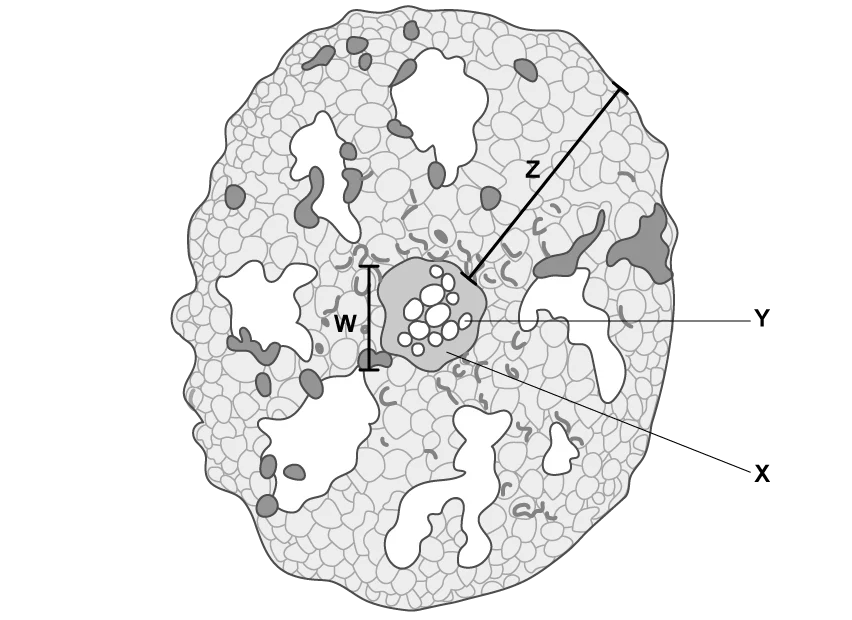
Fig. 1
Identify the tissues marked W, X, and Y in Fig. 1.
1.2. Structure Z in Fig. 1 is known as the root cortex. Water travels across the cortex from the outside of the root to the central structure by several different routes, one of which involves the passage of water through plasmodesmata.
One factor that influences the permeability of plasmodesmata is the quantity of a carbohydrate called callose that accumulates in the cell walls surrounding plasmodesmata.
The location of callose in plasmodesmata can be seen in Fig. 2.
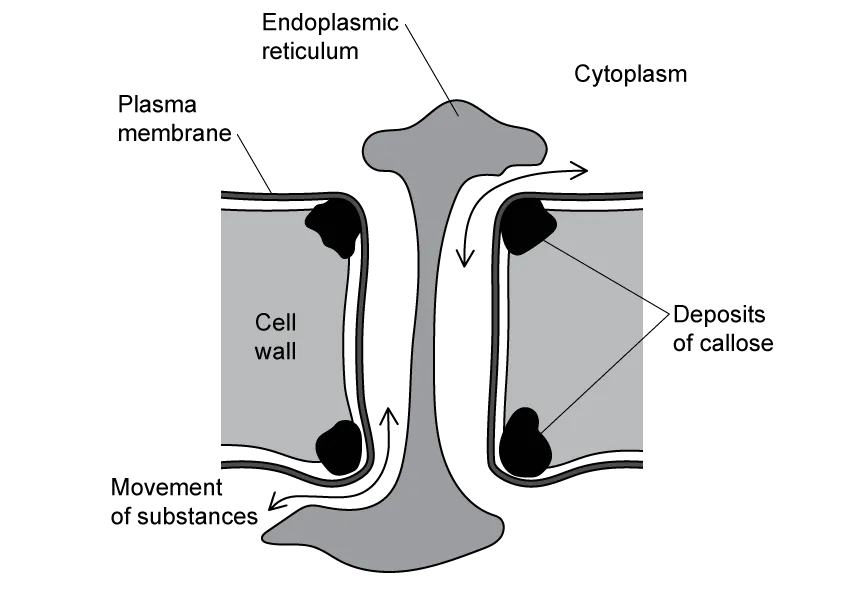
Fig. 2
Suggest how increasing the deposition of callose might influence the permeability of plasmodesmata.
1.3. Research suggests that the presence of heavy metals such as lead in the soil influences the activity of an enzyme called callose synthase, the role of which is to produce callose. For some plants, the presence of heavy metals in the soil reduces their ability to take up water from the soil.
Suggest how the presence of lead in soil might reduce the ability of a plant to take up water from the soil by the route described in part (b).
1.4. Parts (b) and (c) above refer to the movement of water across the cortex via the plasmodesmata.
Describe another pathway by which water can move across the root cortex from the outside of the root towards the centre.

Ai এর মাধ্যমে

১০ লক্ষ+ প্রশ্ন ডাটাবেজ

প্র্যাকটিস এর মাধ্যমে নিজেকে তৈরি করে ফেলো
উত্তর দিবে তোমার বই থেকে ও তোমার মত করে।

সারা দেশের শিক্ষার্থীদের মধ্যে নিজের অবস্থান যাচাই
No related questions found