Longitudinal & Transverse Waves
1. This question has 4 part(s).
1.1. Figure 1 shows a vertical cross-section through a water wave moving from left to right.
Figure 1
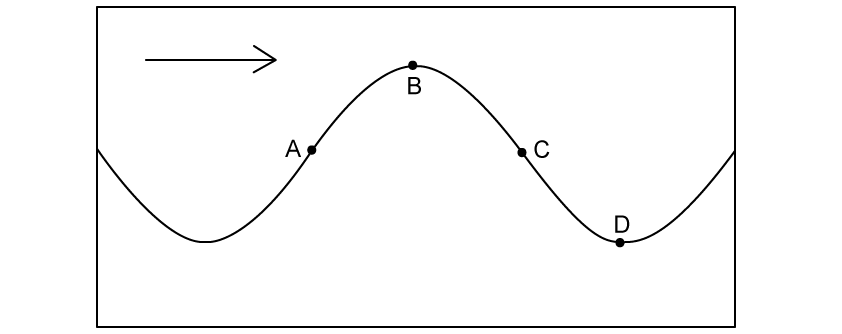
Deduce the point at which the water is moving upwards at maximum speed and explain your reasoning.
1.2. While a microphone is connected to an oscilloscope, a student strikes a tuning fork nearby.
The sound wave produced by the tuning fork is displayed as a trace on the screen. Figure 2 shows the resulting trace.
Figure 2
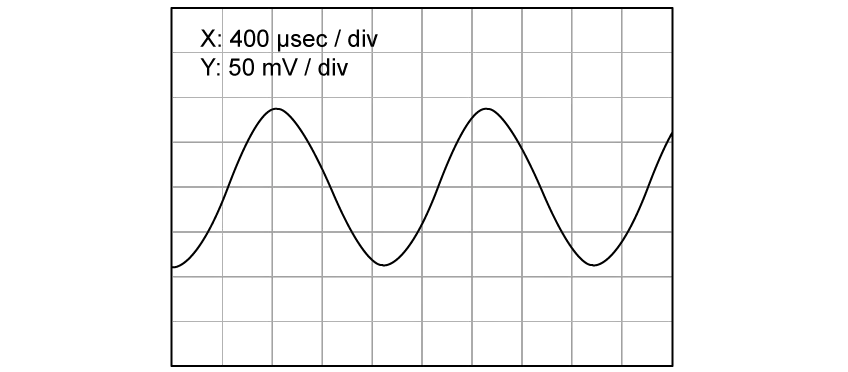
Use Figure 2 to calculate the wavelength of the sound wave produced.
(The speed of sound is approximately 330 m s–1).
1.3. The student’s lab partner strikes another identical tuning fork near the microphone, so that both sound wave signals can be overlaid on the oscilloscope trace. Figure 3 shows the new trace.
Figure 3
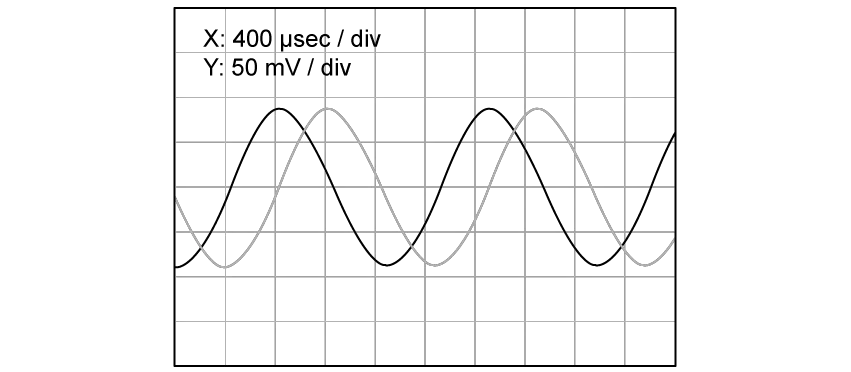
Using Figure 3, determine the phase difference between the two signals as shown on the oscilloscope trace.
Give a suitable unit with your answer.
1.4. The oscilloscope trace is known as a ‘time-view’ of the sound wave because it shows the displacement of an oscillating signal against time. One of the students makes a time-view sketch as shown in Figure 4a, including a label M.
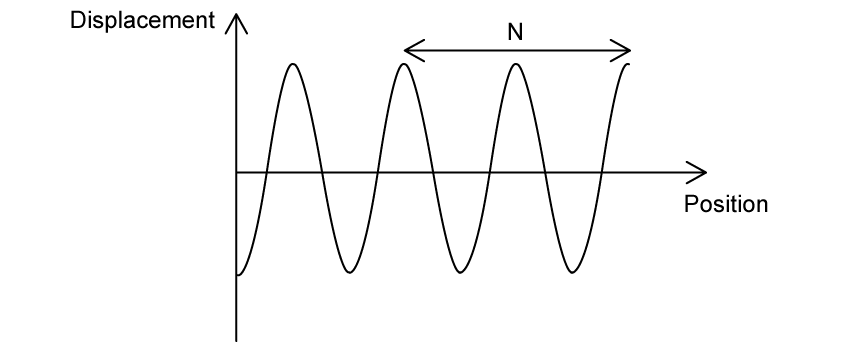
An oscillating signal can also be shown in terms of a ‘space-view’, which would show the displacement of the signal against its position. The other student makes a space-view sketch as shown in Figure 4b, including a label N.
Figure 4a
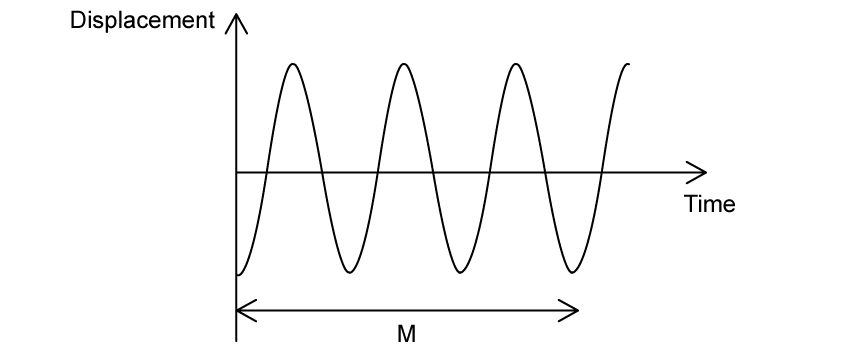
Figure 4b
Show that the wave speed v is given by:
V=

Ai এর মাধ্যমে

১০ লক্ষ+ প্রশ্ন ডাটাবেজ

প্র্যাকটিস এর মাধ্যমে নিজেকে তৈরি করে ফেলো
উত্তর দিবে তোমার বই থেকে ও তোমার মত করে।

সারা দেশের শিক্ষার্থীদের মধ্যে নিজের অবস্থান যাচাই
No related questions found