9. Gas Exchange
1. This question has 4 part(s).
1.1. Describe the pathway taken by a molecule of oxygen from the outside air to the blood of a human.
1.2. Premature babies can suffer from a deficiency of pulmonary surfactant, a substance that prevents alveolar collapse. This can lead to a condition known as respiratory distress syndrome (RDS). Fig. 1 below shows the possible appearance of the lung tissue of an RDS patient and the appearance of normal lung tissue.
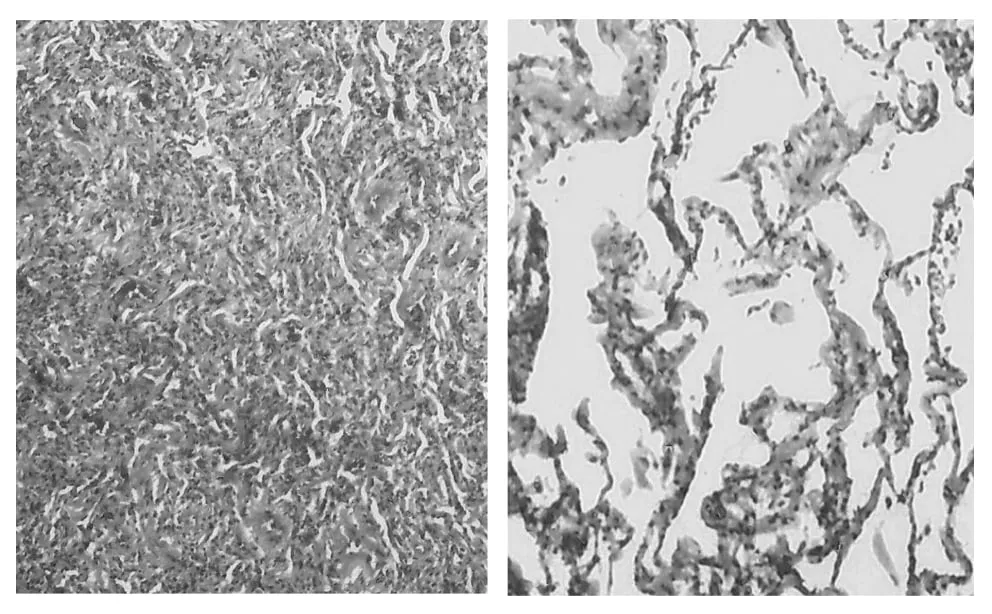
Atlas of Pulmonary Pathology, CC BY-SA 2.0
Fig. 1
(i) Identify and label healthy lung tissue on Fig. 1.
[1]
(ii) Explain the effect of RDS on the lung tissue shown in Fig. 1.
[2]
1.3. RDS can be treated by the administration of an alternative form of pulmonary surfactant to the lungs. The graph shown in Fig. 2 gives the effect of different variations of pulmonary surfactant on the lung volume of rabbits at different pressures. The variations include pulmonary surfactant isolated from sheep lungs, as well as synthetic versions of pulmonary surfactant that contain its separate lipid and protein components. Note that cm H2O is a unit of pressure.
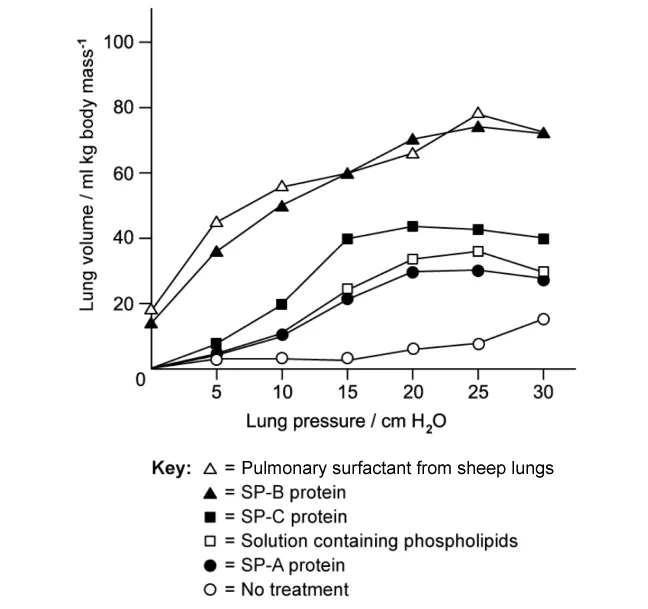
Fig. 2
Use the information provided to explain why each of the following statements is incorrect:
(i) Pulmonary surfactant is essential for lung expansion.
[1]
(ii) Phospholipids are the active component of pulmonary surfactant.
[1]
(iii) Pulmonary surfactant from sheep is the most effective treatment for RDS in premature babies.
[2]
1.4. The form of pulmonary surfactant produced in mammalian lungs contains proteins known as SP-A and SP-D, which are known to be involved with the activation of phagocytes.
Suggest, with a reason, a symptom that would result from a deficiency of SP-A and SP-D proteins.

Ai এর মাধ্যমে

১০ লক্ষ+ প্রশ্ন ডাটাবেজ

প্র্যাকটিস এর মাধ্যমে নিজেকে তৈরি করে ফেলো
উত্তর দিবে তোমার বই থেকে ও তোমার মত করে।

সারা দেশের শিক্ষার্থীদের মধ্যে নিজের অবস্থান যাচাই
No related questions found