12.3 Chromatography
1. This question has 4 part(s).
1.1. Substances can be classified as elements, compounds or mixtures.
Each of the boxes in the diagram represents either an element, a compound or a mixture.
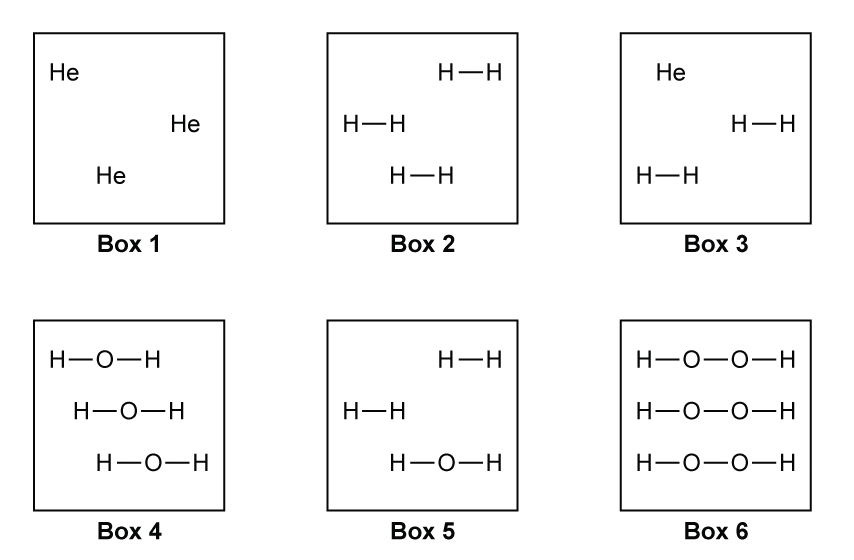
i) Explain which two boxes represent an element.
(2)
ii) Explain which two boxes represent a mixture.
(2)
1.2. The list gives the names of some methods used in the separation of mixtures:
chromatography
crystallisation
distillation
filtration
Use names from the list to choose a suitable method for each separation. Each name may be used once, more than once or not at all.
i) Separating water from sodium chloride solution.
(1)
iii) Separating the blue dye from a mixture of blue and red dyes.
(1)
iii) Separating potassium nitrate from potassium nitrate solution.
(1)
1.3. The colours in three different dyes, A, B & C, were investigated using paper chromatography.
The dyes are soluble in propanone but not soluble in water.
The apparatus used is shown.
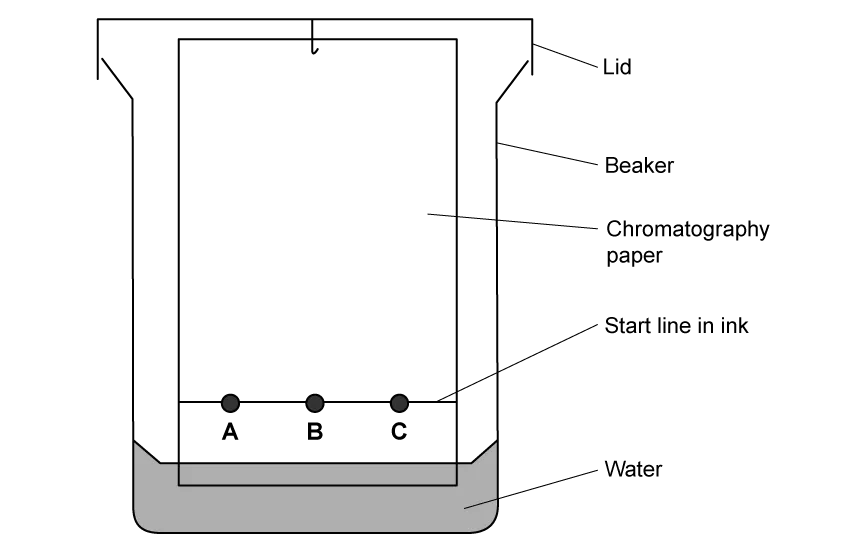
Place two ticks in boxes that identify how the equipment was incorrectly set up.
The dyes are all on the same piece of chromatography paper | |
The solvent used is water | |
A lid is on the beaker | |
The water is not level with the dyes | |
The start line is drawn in ink |
1.4. The student corrected the mistakes and obtained the chromatogram shown in Figure 2.
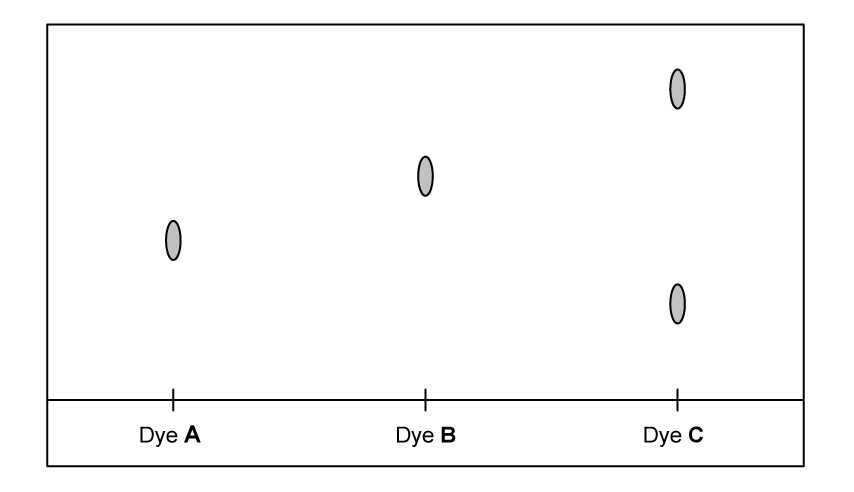
Figure 2
Put ticks (✔ ) in the boxes to show which statements are true and which statements are false.
True | False | |
Dye A is the most soluble | ||
Dye C is a mixture | ||
Dye C contains dye B | ||
Dye C contains dye A | ||
Dye B is a pure substance |

Ai এর মাধ্যমে

১০ লক্ষ+ প্রশ্ন ডাটাবেজ

প্র্যাকটিস এর মাধ্যমে নিজেকে তৈরি করে ফেলো
উত্তর দিবে তোমার বই থেকে ও তোমার মত করে।

সারা দেশের শিক্ষার্থীদের মধ্যে নিজের অবস্থান যাচাই
No related questions found