Effects of Forces
1. This question has 5 part(s).
1.1. A student is determining the spring constant k of a spring by two methods.
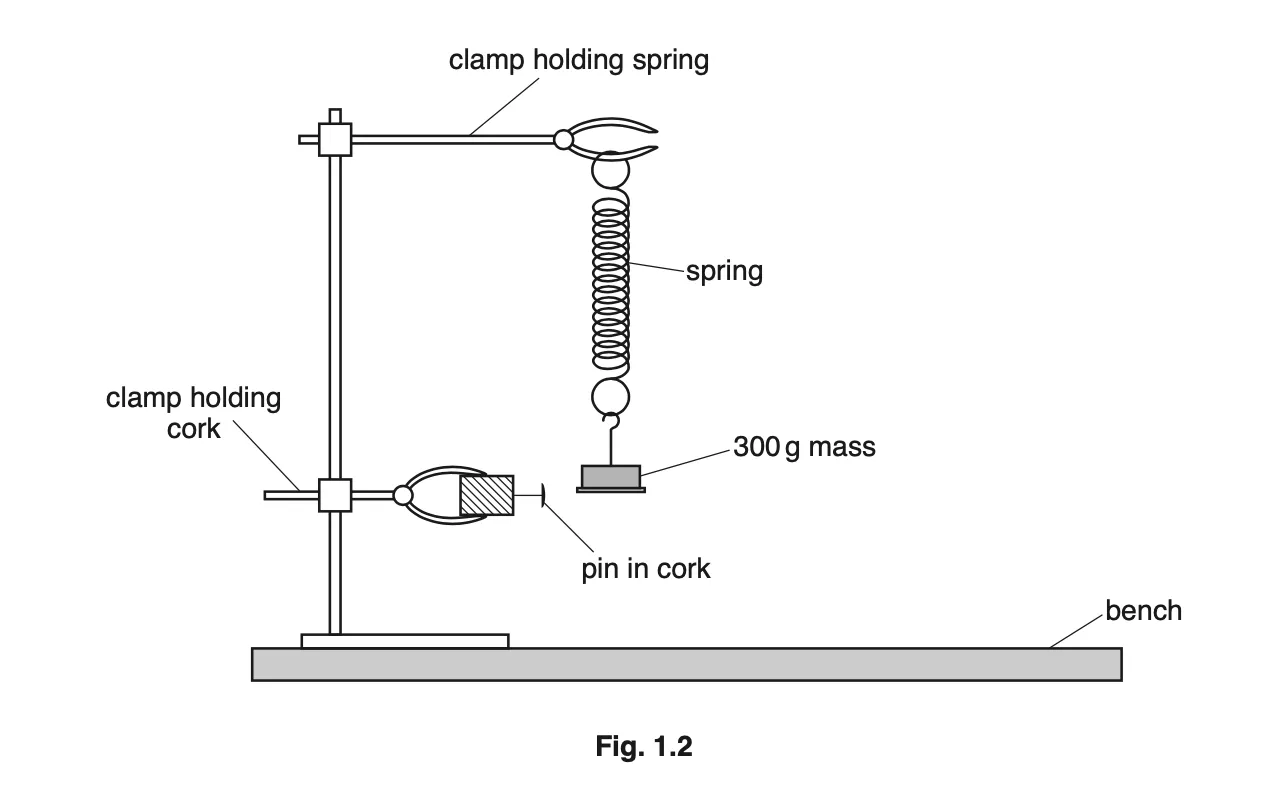
Fig. 1.2 shows how the apparatus is used.
Method 1
On Fig. 1.1, measure the unstretched length of the spring, in mm.
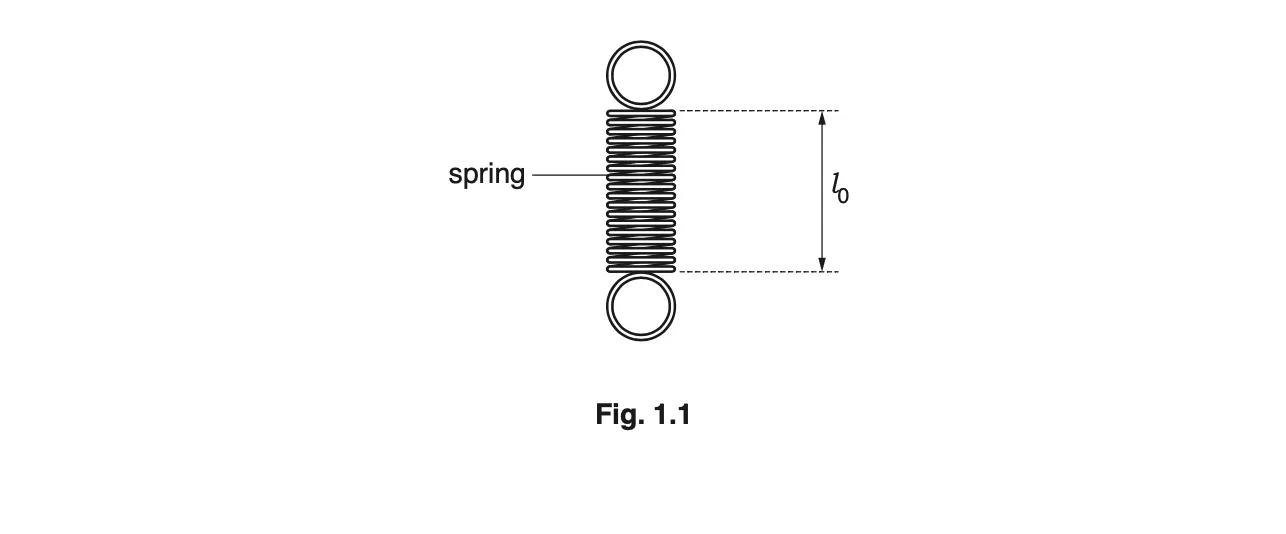
= ................................................. mm
1.2. Extended tier only
The student attaches the spring to the clamp as shown in Fig. 1.2.
He hangs a 300 g mass on the spring.
He measures the new length of the spring.
= 53 mm
(i) Calculate the extension e of the spring using the equation .
e = ................................................. mm [1]
(ii) Calculate a value for the spring constant k using the following equation:
,
where F = 3.0 N.
k = ............................................ N/mm [1]
1.3. Method 2
The student pulls the mass down a short distance and releases it so that it oscillates up and down. Fig. 1.3 shows the time t taken for 10 complete oscillations.

(i) Record the time t taken for 10 complete oscillations.
t = ........................................................ [1]
(ii)
1. Calculate the time T taken for one complete oscillation.
T = .............................................................
2. Calculate T 2.
T 2 = .............................................................
[2]
(iii) Calculate the spring constant k using the following equation:
,
where m = 0.300kg.
k = ............................................ N/mm [1]
1.4. State and explain whether your two values for k are the same within the limits of experimental accuracy.
1.5. A student states that repeating Method 1 with different masses would improve the reliability of the value obtained for k.
Suggest additional values for the mass m that you would use when repeating the experiment to improve the reliability.

Ai এর মাধ্যমে

১০ লক্ষ+ প্রশ্ন ডাটাবেজ

প্র্যাকটিস এর মাধ্যমে নিজেকে তৈরি করে ফেলো
উত্তর দিবে তোমার বই থেকে ও তোমার মত করে।

সারা দেশের শিক্ষার্থীদের মধ্যে নিজের অবস্থান যাচাই
No related questions found