12.1 Disease
1. This question has 4 part(s).
1.1. Streptococcus pyogenes is a pathogenic bacteria that spreads through direct contact with discharges from the nose and throat, as well as through open wounds and sores on the skin of infected people.
In the 19th century, many women died shortly after childbirth due to a disease called puerperal fever, which is caused by an infection of S. pyogenes. At the time, it was common practice for doctors to dissect dead bodies in order to study human anatomy and then move straight on to delivering babies immediately after.
Suggest an explanation for the frequent deaths of women after childbirth due to puerperal fever.
1.2. Table 1 shows the number of births and deaths at a hospital between 1841 and 1846.
Table 1
year | number of births | number of deaths |
1841 | 3036 | 237 |
1842 | 3287 | 518 |
1843 | 3060 | 274 |
1844 | 3157 | 260 |
1845 | 3492 | 241 |
1846 | 3905 | 479 |
Calculate the percentage change in the number of deaths between 1841 and 1846.
Show your working and give your answer to the nearest whole number.
1.3. In 1847 a handwashing policy was introduced at the hospital from part (b) which stated that doctors should wash their hands before delivering babies in the maternity ward. This policy was strictly enforced in 1848.
Fig. 1 shows the death rate of mothers from puerperal fever between 1846 and 1848.
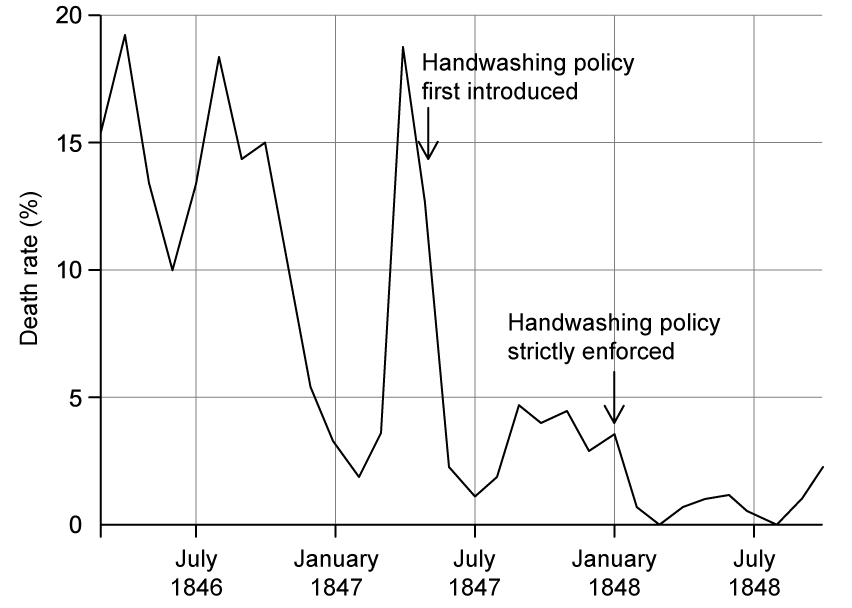
Fig. 1
Describe and explain the data from January 1847 to July 1848.
1.4. Other than washing their hands, suggest two other hygiene practices that doctors in modern hospitals should follow in order to avoid the spread of pathogens to their patients.

Ai এর মাধ্যমে

১০ লক্ষ+ প্রশ্ন ডাটাবেজ

প্র্যাকটিস এর মাধ্যমে নিজেকে তৈরি করে ফেলো
উত্তর দিবে তোমার বই থেকে ও তোমার মত করে।

সারা দেশের শিক্ষার্থীদের মধ্যে নিজের অবস্থান যাচাই
No related questions found