Organic Chemistry Practicals
1. This question has 4 part(s).
1.1. Before a student can prepare aspirin, the salicylic acid used must be pure. Describe how the student can purify the salicylic acid and explain why each step is required.
1.2. The student prepared a sample of aspirin by following the two stages outlined as follows:
Stage 1
Add a known mass of the purified salicylic acid into a dry pear shaped flask and add an excess of 5 cm3 of ethanoic anhydride followed by 8 drops of concentrated phosphoric acid. Attach a condenser to the flask and in the fume cupboard warm the mixture with swirling until the solid has dissolved and warm for another 5 minutes
Stage 2
Carefully add 5 cm3 of cold water to the solution and stand the flask in cold water for precipitation to occur. Filter off the product and wash the product with a little cold water. Transfer to a watch glass and leave to dry overnight. Once dry, weigh your product and record the mass.
Suggest four improvements to the method the student followed.
1.3. Draw a labelled diagram of the apparatus used to filter the mixture in Stage 2 outlined in part (b).
1.4. The reaction for the preparation of aspirin is shown in Figure 1.
Figure 1
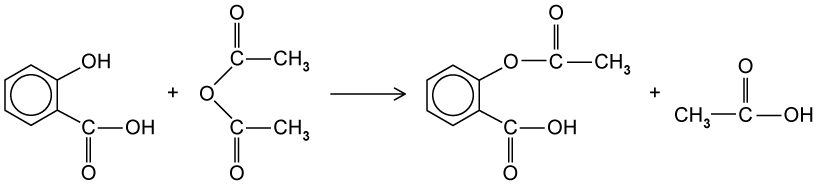
The average percentage yield for the industrial synthesis of aspirin is around 79.2%. If student uses 1.05 g of salicylic acid with an excess of ethanoic anhydride for their aspirin synthesis, calculate the minimum mass of aspirin that they would need to produce to meet industrial standards

Ai এর মাধ্যমে

১০ লক্ষ+ প্রশ্ন ডাটাবেজ

প্র্যাকটিস এর মাধ্যমে নিজেকে তৈরি করে ফেলো
উত্তর দিবে তোমার বই থেকে ও তোমার মত করে।

সারা দেশের শিক্ষার্থীদের মধ্যে নিজের অবস্থান যাচাই
No related questions found